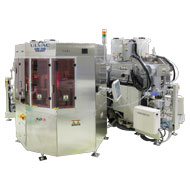
ULVAC Sputtering Systems – Precise PVD Solutions for Demanding Processes
Sputtering is a proven PVD process used to deposit thin, functional films on a wide range of sub-strates. To achieve consistently high film quality, vacuum conditions, process parameters and material deposition must be precisely coordinated.
ULVAC sputtering systems are designed for demanding applications in semiconductor, MEMS and electronics manufacturing. Our portfolio ranges from compact cluster sputtering equipment to modu-lar multi-chamber systems for processing 300 mm wafers. High reproducibility, flexible system con-figurations and reliable process control provide the foundation for efficient development and produc-tion processes.
Request Your Personal Consultation
- Single to Tandem Core Platform
- High Performance
- High Reliability
- High Flexibiliy
- Easy maintenance
- Outstanding film stress control and particle reduction
- High-quality deposition
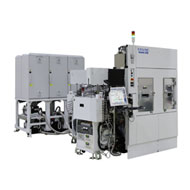
- Compatible with various applications
- Substrate size: Up to Φ300mm
Why ULVAC Sputtering Systems Are the Right Choice
Every sputtering machine must be matched to the respective materials, substrate sizes, process steps and production targets. ULVAC therefore does not offer a single standard solution, but a range of con-figurable sputtering systems for specialized manufacturing processes.
Features of our Sputtering Equipment
Our Sputtering Systems
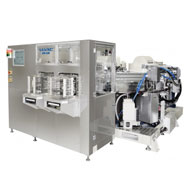
ULVAC offers different sputtering systems designed for a range of substrate sizes, production vol-umes and process requirements.
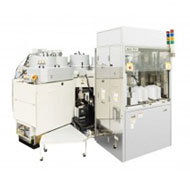
ENTRON-EXX – Multi-Chamber Sputtering System for 300 mm Wafers
The ENTRON-EXX is a high-performance multi-chamber sputtering system for the 300 mm silicon semiconductor market. The system is available as a single or tandem platform and can be flexibly equipped with different process modules.
In addition to PVD processes, CVD and ALD processes can also be integrated depending on the con-figuration. This makes the sputtering equipment suitable for NVM applications, aluminium and copper interconnects, Ti/TiN barrier layers, thick aluminium films and Co/Ni salicide processes.
Compound semiconductor processing is also possible.
Its high level of flexibility, reliable wafer transfer and ability to integrate multiple process modules make the ENTRON-EXX a suitable solution for demanding semiconductor production environments with high throughput requirements.
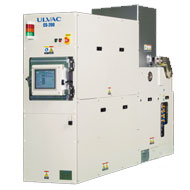
SME-200 – Compact Cluster Sputtering System
The SME-200 is a compact and cost-effective cluster sputtering system designed for MEMS devices, SAW components and compound semiconductors. It supports the production of various components, including gate electrodes, capacitors and resistors.
High deposition reproducibility and precise control of film properties support reliable manufacturing processes. At the same time, the maintenance-friendly design helps reduce system downtime. Different system configurations allow the sputtering machine to be adapted to the respective application and available production space.
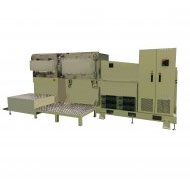
uGmni-200 and uGmni-300 – Modular Deposition and Etching Platforms
The uGmni-200 and uGmni-300 combine different deposition and etching modules within a modular cluster system. The individual process modules are based on a common platform, use similar components and are controlled via the same operating panel.
This can reduce spare parts requirements and operating complexity while allowing different process steps to be combined within a coordinated system environment. Depending on the configuration, modules for sputtering, etching, ashing and PE-CVD are available.
Potential applications include seed and metal layers for power semiconductors, the sputtering and etching of PZT films for MEMS sensors, VCSEL processes, packaging applications and insulating films for communication devices.
Applications of our Sputtering Equipment in Electronics Manufacturing
ULVAC sputtering systems are used wherever thin films with defined electrical, mechanical or optical properties are required.
- Semiconductor Manufacturing: Deposition of interconnect, electrode, barrier and functional metal layers.
- MEMS Production: Manufacturing and processing of functional films for sensors and other microelectromechanical components.
- SAW Devices: Precise coating processes for components used in applications such as signal processing.
- Power Semiconductors: Production of seed layers, metal films and other functional thin films.
- Compound Semiconductors: Process solutions for demanding electronic and optoelectronic components.
- Advanced Packaging: Deposition and pretreatment of films for modern packaging processes.
- Optical Components: Processing of components such as VCSELs and other optoelectronic applications.
- Communication Devices: Combination of deposition, CVD and etching processes for insulating and functional films.
Finding the Right Sputtering System for Your Requirements
The right sputtering equipment depends on several factors. These include the required substrate size, the material to be deposited, the desired film uniformity, the planned throughput and any additional process steps that need to be integrated.
While the SME-200 provides a compact cluster sputtering solution for MEMS, SAW and compound semiconductor applications, the uGmni series enables the combination of various deposition and etching processes. The ENTRON-EXX, by contrast, is designed for complex processes in 300 mm semiconductor manufacturing and demanding high-volume production environments.
Our experts support you in selecting and configuring a sputtering machine that matches your technical requirements and existing production processes.
Why Choose ULVAC – Expertise, Quality and Service
ULVAC combines extensive experience in vacuum technology with comprehensive process expertise and an international network. In addition to individual components, we develop complete process systems and customized solutions for different areas of electronics and semiconductor manufacturing.
By combining equipment development, vacuum sputtering technology and process support, ULVAC provides coordinated assistance throughout the entire life cycle of your sputtering system.
H3 Comprehensive Service for Your Sputtering Equipment
Our service portfolio supports the reliable and cost-effective operation of your system over the long term:
- Installation and Commissioning: Professional integration of the system into your production environment.
- Technical Support: Assistance with technical questions and challenges during ongoing operation.
- Maintenance and Inspections: Regular checks to maintain system performance and availability.
- Repairs: Fast support in the event of malfunctions or defective components.
- Upgrades: Adaptation of existing systems to changing process or production requirements.
- Spare Parts: Provision of suitable components for reliable equipment operation.
- Training: Practical instruction for your employees on operation, maintenance and system functions.
On-Site and Remote Support: Flexible assistance tailored to your situation.
Contact Us – Expert Guidance and Support
Are you looking for sputtering equipment for a specific coating process, or would you like to combine several process modules within a cluster system? Our team of experts will help you identify a technically and economically suitable solution for your application.
FAQ – Frequently Asked Questions About Sputtering Systems
What Is Sputtering?
Sputtering is a physical vapour deposition process used to produce thin films. Material is removed from a target inside a vacuum chamber and deposited onto a substrate. This process can be used to create metallic, dielectric or insulating films.
How Does a Sputtering Machine Work?
A plasma is generated inside the process chamber under vacuum conditions. Ions contained in the plasma strike the target and release individual particles from its surface. These particles move through the vacuum chamber and form a thin film on the substrate.
What measurement ranges do the instruments cover?
ULVAC vacuum gauges typically measure pressures from approximately 10⁵ Pa (atmospheric pressure) down to 10⁻⁸ Pa and below. Depending on the model, specialized sensors are available for different sub-ranges.
What Are the Benefits of Sputtering Systems?
Sputtering systems enable controllable, reproducible and uniform coating processes. Depending on the system configuration, different materials can be processed, several films can be deposited consecutively and additional process steps can be integrated.
What Is a Cluster Sputtering System?
In a cluster sputtering system, several process chambers are arranged around a central transfer chamber. Substrates can therefore be moved between different modules without completely breaking the vacuum. Cluster sputtering equipment is particularly suitable for multi-stage and contamination-sensitive manufacturing processes.
Which Sputtering Equipment Is Suitable for MEMS Applications?
The SME-200 and the uGmni series are particularly suitable for MEMS applications. The SME-200 provides a compact cluster solution for MEMS, SAW and compound semiconductor devices. The uGmni series can additionally combine sputtering, etching, ashing and PE-CVD processes within a single platform.
Can Sputtering Be Combined with Other Processes?
Yes. Depending on the selected system, additional process modules can be integrated. The ENTRON-EXX, for example, can be configured for PVD as well as CVD and ALD processes. The uGmni series supports combinations of sputtering, etching, ashing and PE-CVD.
What Should Be Considered When Selecting a Sputtering Machine?
Important selection criteria include substrate size, coating materials, required throughput, film uniformity, reproducibility and the necessary pre- and post-treatment steps. Available space, expandability and maintenance requirements should also be considered when planning the system.
What Is Vacuum Sputtering Technology Used For?
Vacuum sputtering technology is used to deposit thin functional films under controlled vacuum conditions. Typical applications include semiconductor interconnects, electrodes, barrier layers, MEMS components, optical devices, power semiconductors and advanced packaging.